By Spalls Landscaping Editorial Team · Updated 2026-08-05
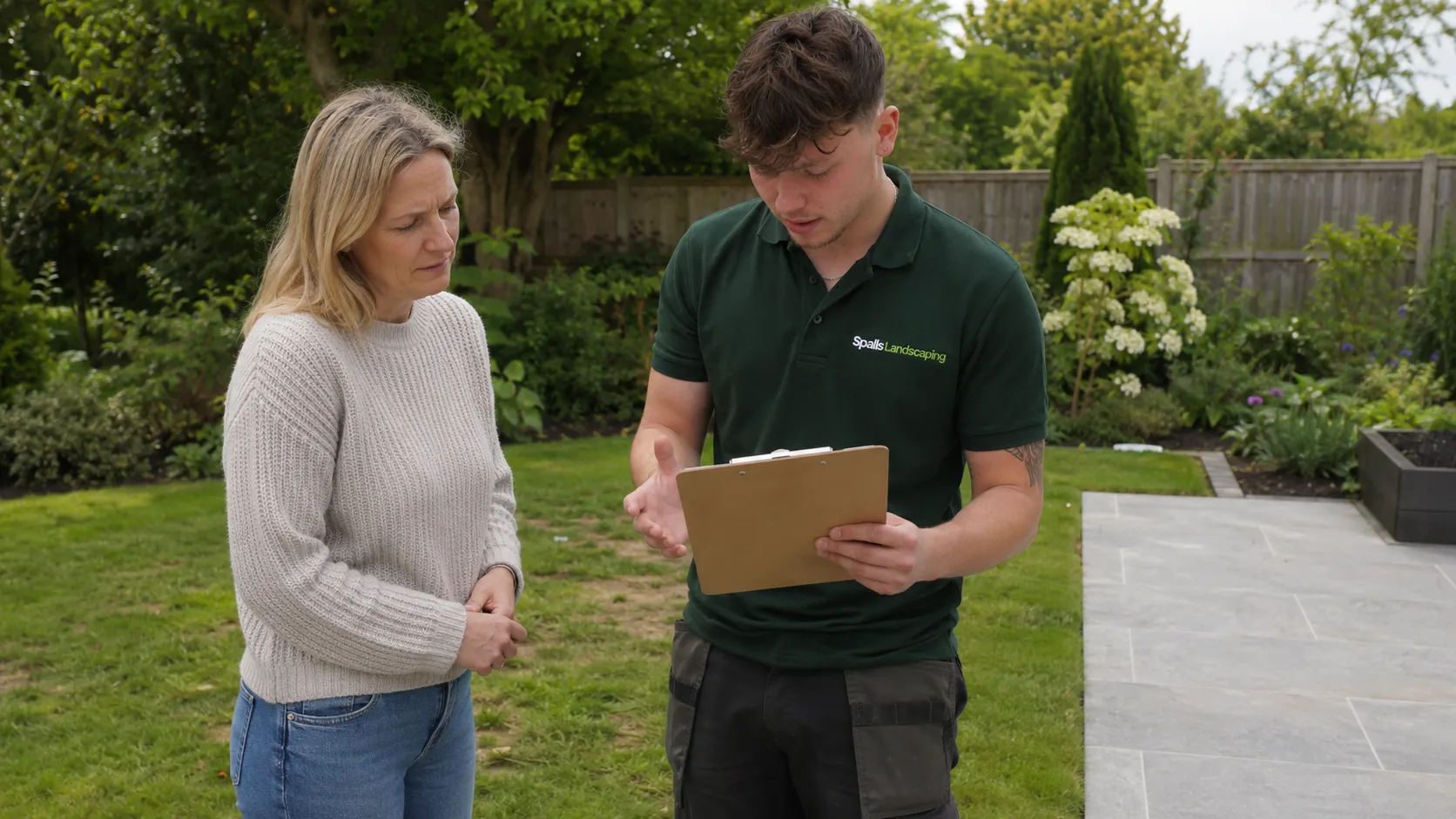
Hiring gardeners and landscapers near me should start with a clear brief, a site visit and comparable written quotes. Check relevant insurance, recent work, waste arrangements, materials, timing and aftercare before agreeing to any landscape project. Spalls Landscaping is a family-run company based in Braintree, serving homes and businesses across Essex, London and surrounding areas.
The right contractor should understand how you want to use the garden, not simply suggest the same solution for every property. That means balancing landscape appearance with drainage, lawn care, planting, hardscape construction and realistic maintenance. Spalls Landscaping offers garden design, commercial grounds care, lawn and turf management, planting, pruning, hardscaping and seasonal garden maintenance. The company also provides complimentary consultations and no-obligation quotes.
Key Takeaways
- Write down how the garden needs to look, feel and function before requesting quotes.
- Compare the same landscape scope across at least three itemised proposals.
- Ask to see relevant insurance, recent project photographs and references.
- Confirm who handles installation, site preparation, waste, materials and aftercare.
- Discuss native plant choices, drainage, mulch, lawn care and maintenance before work begins.
- Put the agreed price, payment stages, timeline and change process in writing.
What Should You Prepare Before Contacting a Landscaper?
Begin with the problems you want the finished landscape to solve. One household may need a safer route from the back door to a patio. Another may want privacy, a larger lawn, easier maintenance or a wildlife-friendly border. Take photographs, measure the main areas and mark any features that must stay.
Also note practical constraints. Access width can affect machinery and material deliveries. Shade, exposure, slopes, poor drainage and existing trees can all change the landscape plan. Mention pets, children, mobility requirements and how often you are willing to carry out maintenance.
Prepare a simple wish list under three headings:
- Essential: drainage repair, safe paths, fencing or lawn renovation.
- Preferred: a seating area, native plant border, lighting or a water feature.
- Optional: raised beds, extra annuals or a second hardscape feature.
This gives each contractor the same starting point. It also prevents attractive extras from pushing essential landscape work outside your budget.
How Do You Find Qualified Garden Landscapers Near Me?
Search results for garden landscapers near me are useful for building a shortlist, but location alone does not establish suitability. Read the company’s own service pages, review recent projects and look for work similar in scale to yours. A contractor who is excellent at weekly maintenance may not be the right choice for a complex patio installation. Equally, a hardscape specialist may not provide the planting knowledge or lawn care your garden needs after construction.
People often try several searches, including landscaping around me and landscaping close to me. Whichever wording you use, apply the same checks:
- Does the company work in your location?
- Does its portfolio show the type of landscape you want?
- Can it manage both installation and ongoing maintenance if required?
- Will it provide an itemised written quote?
- Can it explain the proposed materials and site preparation?
You can review the full range of Spalls Landscaping services before arranging a consultation. The service list covers garden design, business landscaping, planting and softscaping, hardscape and patio construction, seasonal garden maintenance and water feature installation.
What Credentials and Evidence Should You Check?
Ask what insurance applies to the proposed work and request evidence rather than relying on a verbal assurance. The appropriate cover can depend on the landscape project, the machinery used and whether employees or subcontractors will attend.
There is no single general licence that proves every UK landscaper is competent at every task. Relevant checks depend on the work. If a contractor will remove garden or construction waste, confirm how it will be handled and check the business or carrier on the Environment Agency’s public register. GOV.UK explains that businesses transporting, buying, selling or disposing of waste may need to register as a waste carrier, broker or dealer.
Ask for two or three recent examples with photographs. Useful evidence includes a project with similar access, soil, hardscape installation or planting conditions. References are most valuable when you ask specific questions about communication, punctuality, changes, snagging and maintenance advice.
What Should a Landscaping Quote Include?
A useful quote describes the complete landscape scope rather than giving one unexplained total. It should make clear what is included, excluded and assumed. If two quotes describe different work, the lower number may not represent better value.
| Quote item | What to look for | Why it matters |
|---|---|---|
| Preparation | Clearance, excavation, levels and ground improvement | Preparation affects drainage, stability and the finished landscape |
| Installation | Labour, equipment, access and expected sequence | Clear installation detail reduces misunderstandings |
| Materials | Product type, quantity, finish and allowance | Similar-looking materials can differ in durability and cost |
| Planting | Sizes, quantities, substitutions and establishment care | A native plant scheme needs enough detail to compare properly |
| Hardscape | Base construction, edging, joints and drainage | The visible finish is only part of a durable hardscape |
| Lawn care | Turf or seed choice, soil preparation and first cuts | Early lawn care affects establishment |
| Maintenance | Visit frequency, seasonal tasks and responsibilities | Maintenance should match the finished space and your budget |
| Waste | Removal method and disposal responsibility | This avoids surprise charges and unclear legal responsibility |
| Programme | Start window, duration and weather allowances | A realistic programme protects both parties |
| Payment | Deposit, stage payments and final balance | Payments should follow clear landscape milestones |
TrustMark advises homeowners to use a written contract, so the work, price and timing are clear to both sides. Before signing, ask how variations will be approved and priced. A small landscape change during construction can affect labour, materials and completion dates.
Which Questions Reveal Whether a Landscaper Understands the Site?
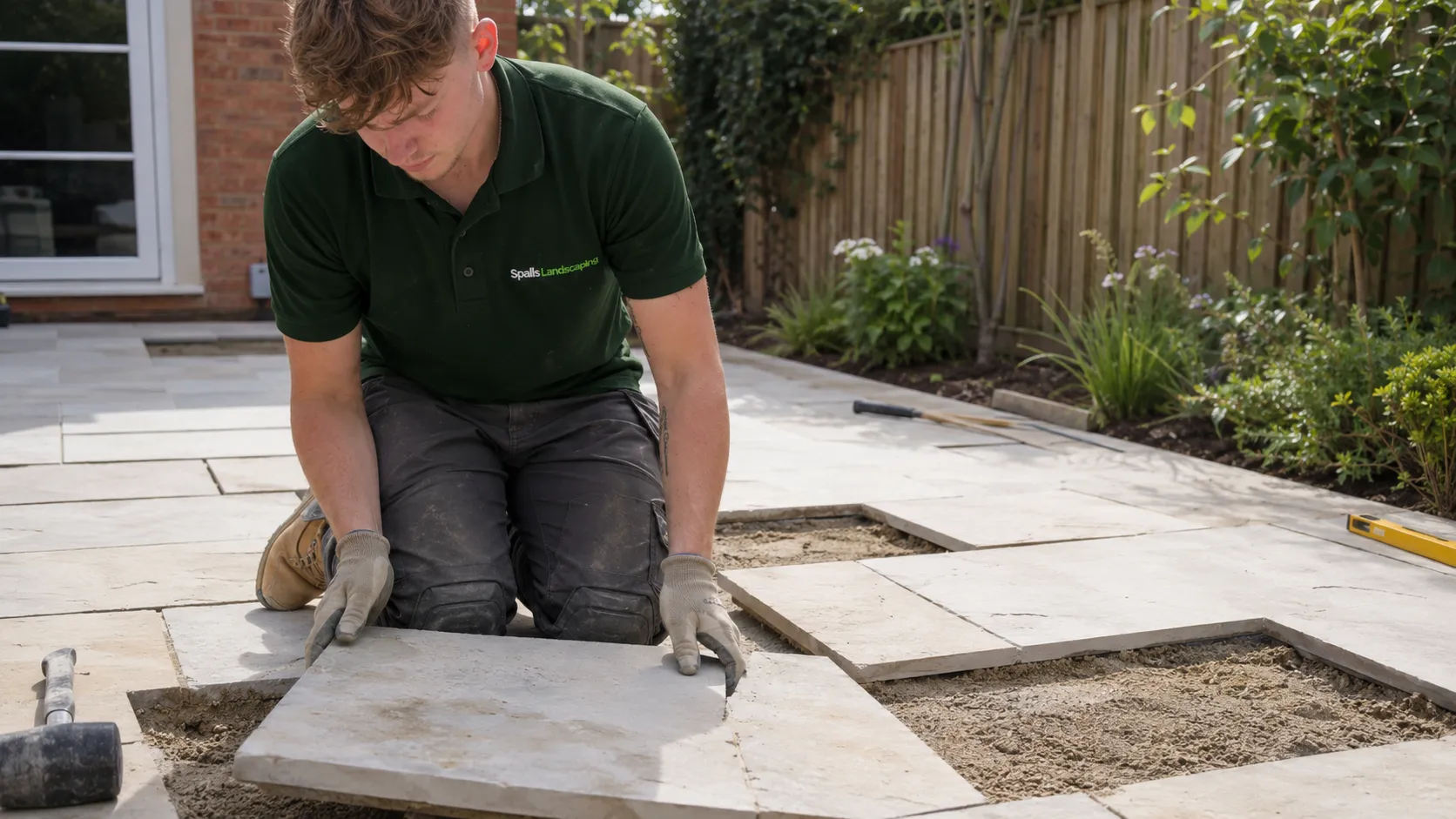
The best questions invite an explanation, not a yes or no answer.
How Will the Design Respond to the Property?
Ask how the design accounts for sunlight, soil, drainage, views, access and the style of the building. A strong landscape proposal should explain why areas are positioned where they are and how movement through the garden will work. It should also show how planting will soften each hardscape element instead of treating paving and plants as unrelated parts.
What Happens Before Installation Begins?
Good installation depends on preparation. Ask how existing surfaces will be removed, how levels will be established and how underground services will be considered. For a hardscape installation, discuss sub-base depth, edge restraint and water movement. For turf installation, discuss soil preparation and establishment lawn care.
What Maintenance Will the Finished Garden Need?
Ask for a realistic maintenance plan for the first year and beyond. New planting usually needs closer attention while roots establish. A low-maintenance landscape still requires seasonal work, even if the tasks are less frequent. Confirm whether maintenance is included, available as a separate service or left to the client.
Spalls Landscaping provides year-round seasonal garden maintenance, including pruning, weeding, mulching and seasonal clean-ups. You can also read more about the company’s family-run approach and experience.
How Should Planting Be Assessed?
Planting should suit the conditions and the level of maintenance you can provide. Ask why each plant is appropriate for the soil, light, available space and desired landscape style. Also ask how the plan supplies interest across the seasons rather than relying on a short flowering period.
A native plant can be valuable, but “native” should not be used as a shortcut for “suitable everywhere”. Each native plant still has preferences for moisture, light and soil. A good native plant plan considers mature size, spacing and how species work together.
Use these questions when reviewing a native plant proposal:
- Is each native plant suited to the site’s sun and soil?
- Does the native plant mix provide flowers, shelter or food in different seasons?
- Will any native plant spread beyond the available space?
- How will the native plant area be managed during establishment?
- Does the native plant scheme work with the wider landscape rather than feeling separate?
- Is there a clear native plant aftercare plan for the first growing season?
The RHS research on native and non-native plants is a useful reminder that plant choice should be evidence-led. A diverse native plant palette can support wildlife, but the overall planting mix, structure and flowering period matter too.
Annuals can provide quick seasonal colour while slower shrubs and perennials establish. However, annuals normally need repeat planting, so include that cost and labour in the maintenance plan. Ask whether the designer has relied on annuals for the main effect or used them as accents within a longer-lasting native plant framework.
What Should You Ask About Soil, Mulch and Feeding?
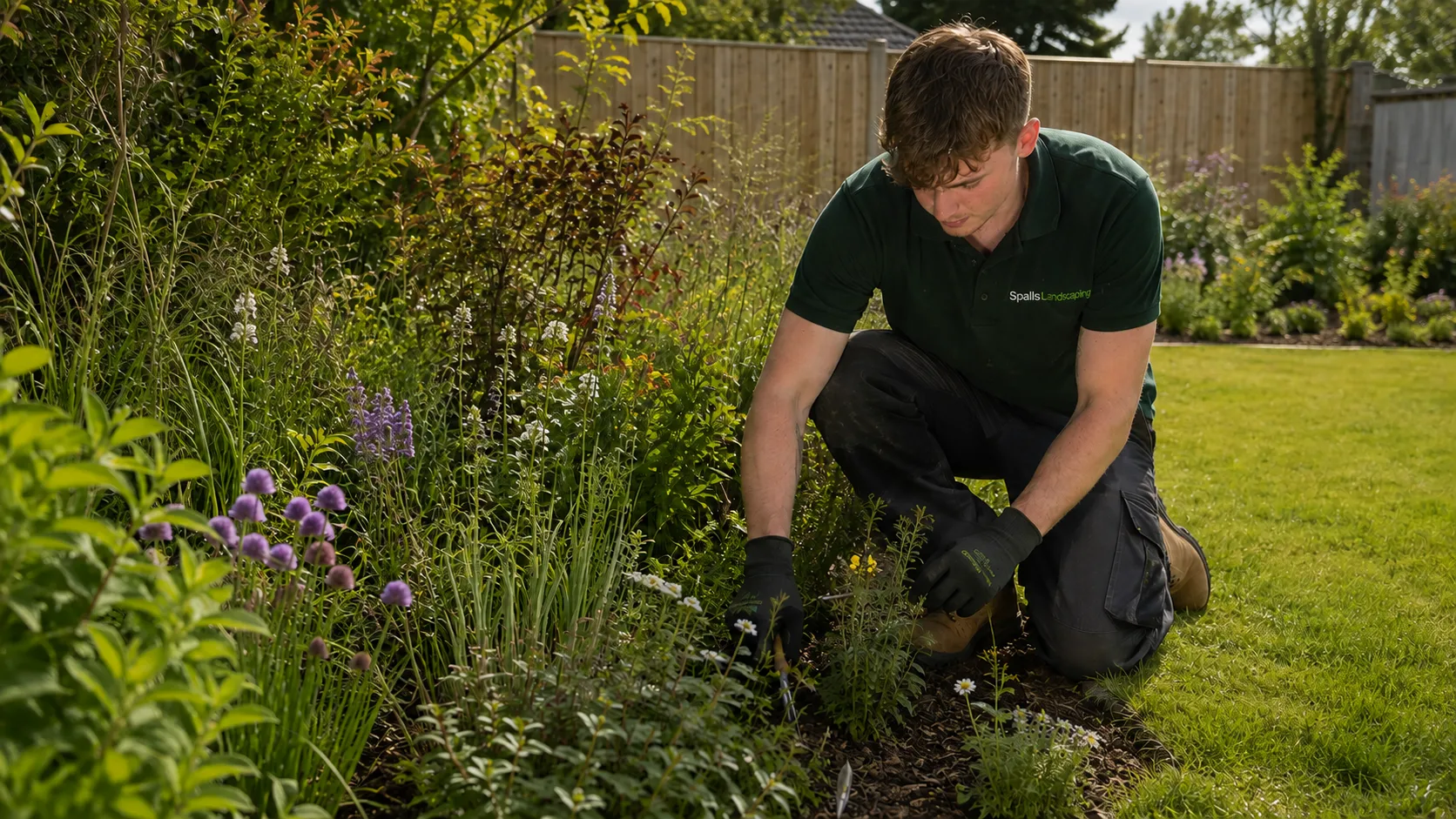
Soil preparation is easy to overlook because it disappears beneath the finished landscape. Ask whether the contractor has assessed texture, compaction and drainage, and whether imported topsoil or organic matter is required.
Mulch can help conserve moisture and suppress weeds when selected and applied appropriately. Clarify the mulch type, proposed depth and whether it is safe around stems. Also ask whether mulch replenishment is part of future maintenance. Too much mulch against trunks or crowns can cause problems, so more is not always better.
Search data often uses the US spelling “fertilizer”, while UK editorial copy normally uses “fertiliser”. If a quote lists fertilizer products, ask what the soil or plant condition indicates before accepting a routine application. A fertilizer schedule should be linked to actual need, plant type and season. More fertilizer is not automatically better. Ask whether the fertilizer is for a new lawn, established turf or particular planting, and whether fertilizer application forms part of ongoing maintenance. The proposed fertilizer product and rate should be recorded clearly.
For additional practical guidance, the RHS recommends improving soil with organic matter and applying mulch to moist soil as part of sensible water collection and use.
When Should a Rain Garden Be Discussed?
A rain garden is a planted area designed to receive runoff from hard surfaces and hold it temporarily while water filters into the ground. It may be worth discussing where water collects after heavy rain or where a new hardscape surface changes runoff.
Ask the landscaper where water will enter and leave the rain garden, how overflow will be managed and whether the soil drains at a suitable rate. The planting plan should match the alternating wet and dry conditions. A native plant may suit part of the rain garden, but selection should follow the site conditions rather than a generic list.
The RHS guide to rain gardens describes a rain garden as an attractive, wildlife-friendly way to manage runoff from hard surfaces. For front gardens, government guidance on permeable surfacing explains when planning permission may be needed for impermeable paving over five square metres. Ask the contractor to identify any permission question before installation rather than after the landscape has been agreed.
How Do You Compare Hardscape Proposals?
Hardscape work includes features such as patios, walkways and retaining walls. Do not compare colour and price alone. Ask how the base, falls, joints, edging and drainage will be constructed. The chosen materials should be suitable for the use, expected traffic and local conditions.
For each hardscape quote, confirm:
- The exact materials and finish.
- The preparation included before installation.
- How water will move away from buildings.
- Whether a rain garden, border or permeable area receives runoff.
- How the hardscape meets lawns, beds and thresholds.
- What maintenance the surface will need.
Spalls Landscaping describes its hardscaping service as covering patios, walkways and retaining walls. Its guide to hardscaping ideas and materials can help you identify preferences before the site visit.
How Much Ongoing Maintenance Is Realistic?
Maintenance frequency depends on plant growth, lawn size, finish standards and season. Weekly or fortnightly visits may suit a formal landscape during active growth, while another property may need monthly or seasonal maintenance. The important point is to agree the tasks, not just the frequency.
A useful maintenance schedule may cover lawn care, pruning, weeds, leaf clearance, mulch checks, plant health and hardscape inspection. It should also state who waters new planting and who monitors a new native plant area during establishment.
Ask how the maintenance plan changes through the year. Spring may focus on growth, feeding and lawn care. Summer can require watering and presentation work. Autumn often brings leaf clearance, planting and mulch work. Winter gives more opportunity for structural pruning and planning. This seasonal approach keeps the landscape healthy without treating every visit as identical.
What Warning Signs Should You Avoid?
Be cautious if a contractor:
- Will not provide an itemised written quote.
- Pushes for an immediate decision before inspecting the site.
- Cannot explain installation or drainage details.
- Avoids questions about insurance, waste or materials.
- Offers no clear route for approving changes.
- Suggests a native plant list without considering site conditions.
- Promises a maintenance-free landscape.
- Requests payment terms that do not reflect clear project stages.
Price matters, but an incomplete quote can make the cheapest offer expensive later. Compare scope, preparation, materials, communication and aftercare together.
A Simple Final Decision Scorecard
Score each shortlisted company from one to five against the following:
| Area | Question |
|---|---|
| Understanding | Did they listen and respond to how you will use the garden? |
| Evidence | Did they provide relevant landscape examples and references? |
| Scope | Is preparation, installation, planting and waste clearly described? |
| Planting | Is the native plant approach suitable for the actual site? |
| Construction | Are hardscape build-up, levels and drainage explained? |
| Aftercare | Is lawn care and planting maintenance realistic? |
| Commercial clarity | Are price, timing, payment and changes written down? |
| Communication | Are answers prompt, specific and easy to understand? |
The score does not replace judgement, but it makes differences visible. Choose the contractor who gives you confidence in both the finished landscape and the process used to create it.
Why Consider Spalls Landscaping?
Spalls Landscaping is a family-run business with over 43 years of experience. Based in Braintree, it serves residential and commercial clients across London, Essex and surrounding areas. The team operates 24/7 and states a rapid 2–4-hour response time.
Its services include garden design, commercial grounds care, lawn and turf management, planting, pruning, hardscaping, seasonal maintenance and water feature installation. Each proposal is tailored to the property and project requirements. To discuss your landscape, you can request a complimentary consultation and no-obligation quote or contact Spalls Landscaping.
Frequently Asked Questions
What Should I Ask Gardeners and Landscapers Near Me Before Hiring?
Ask about relevant insurance, recent comparable work, site preparation, installation, materials, waste removal, timing, payment stages and maintenance. Request an itemised written quote and make sure any changes must be agreed in writing.
How Many Landscaping Quotes Should I Compare?
Three comparable quotes are a useful starting point. Give each company the same landscape brief, then compare scope and assumptions as well as the total price.
Should a Landscaper Provide a Planting Plan?
For a substantial planting project, the proposal should identify quantities, sizes, locations and substitutions. If a native plant scheme is important to you, ask how every native plant suits the site and how it will be maintained during establishment.
Who Is Responsible for Garden Waste?
The quote should state who removes waste and where it will go. If waste is taken away, check the relevant carrier on the Environment Agency public register and keep the paperwork supplied for the work.
Is a Low-Maintenance Garden Maintenance-Free?
No. A lower-maintenance landscape can reduce the frequency or intensity of work, but lawns, planting, mulch and hardscape areas still need seasonal attention.
Does Spalls Landscaping Offer Free Quotes?
Yes. Spalls Landscaping states that it offers complimentary consultations and no-obligation quotes, with a property visit and a detailed proposal covering costs, timelines and specifications.
